Industry
Product Design
Client
London South Bank University (FMP)
A sustainable white good concept for the modern home.
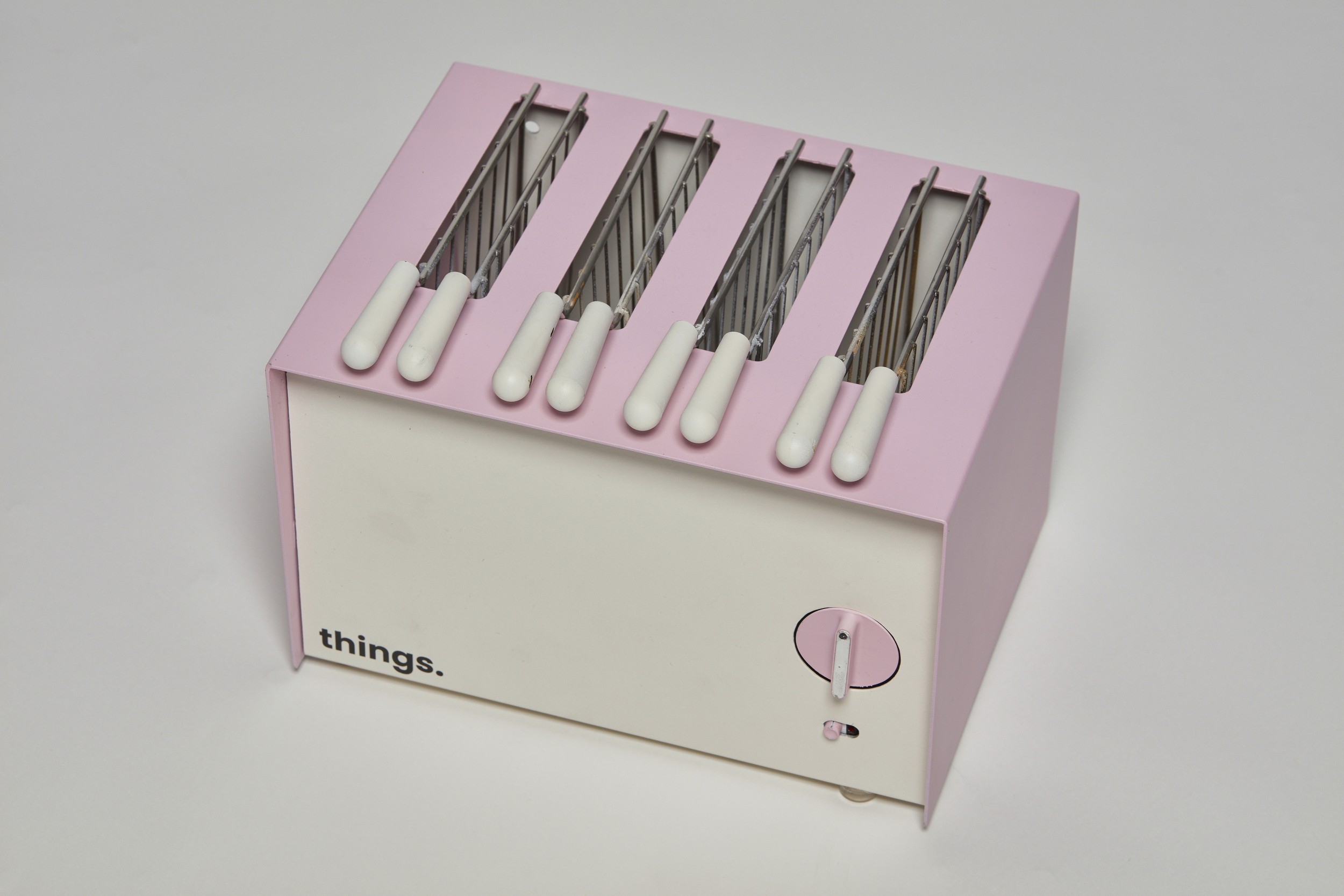
My final year project, rethinking the humble toaster as a modular, repairable system.
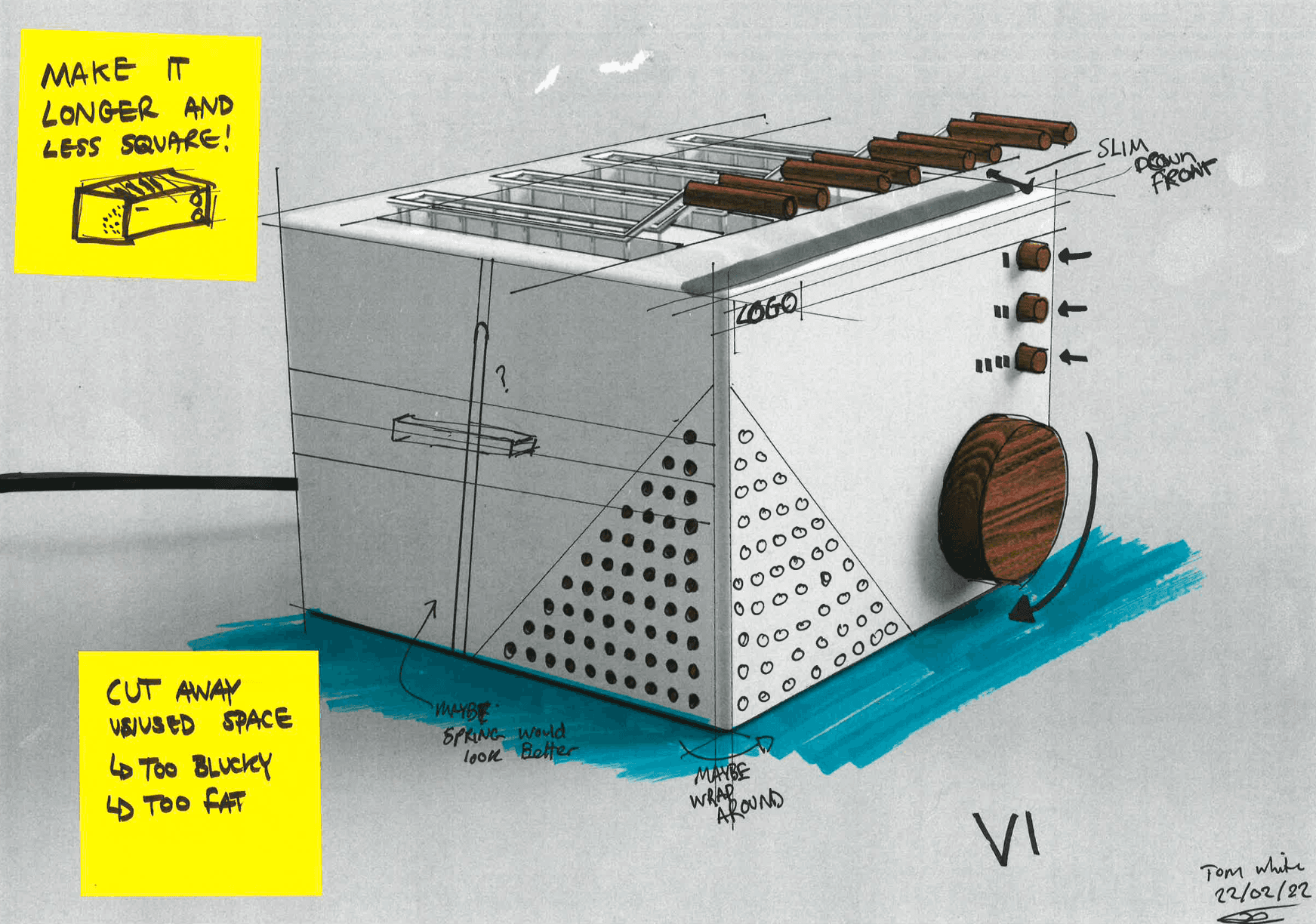
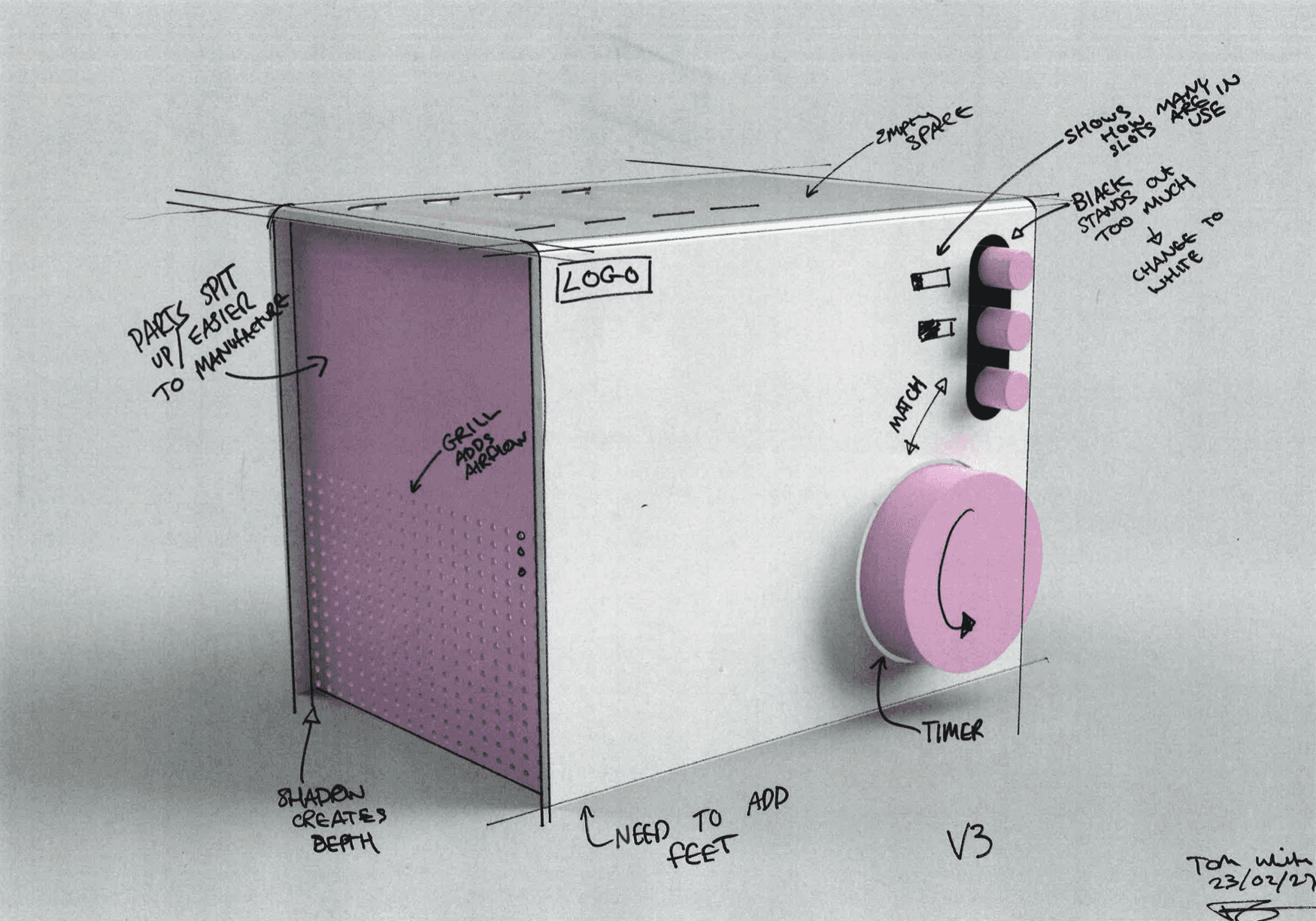
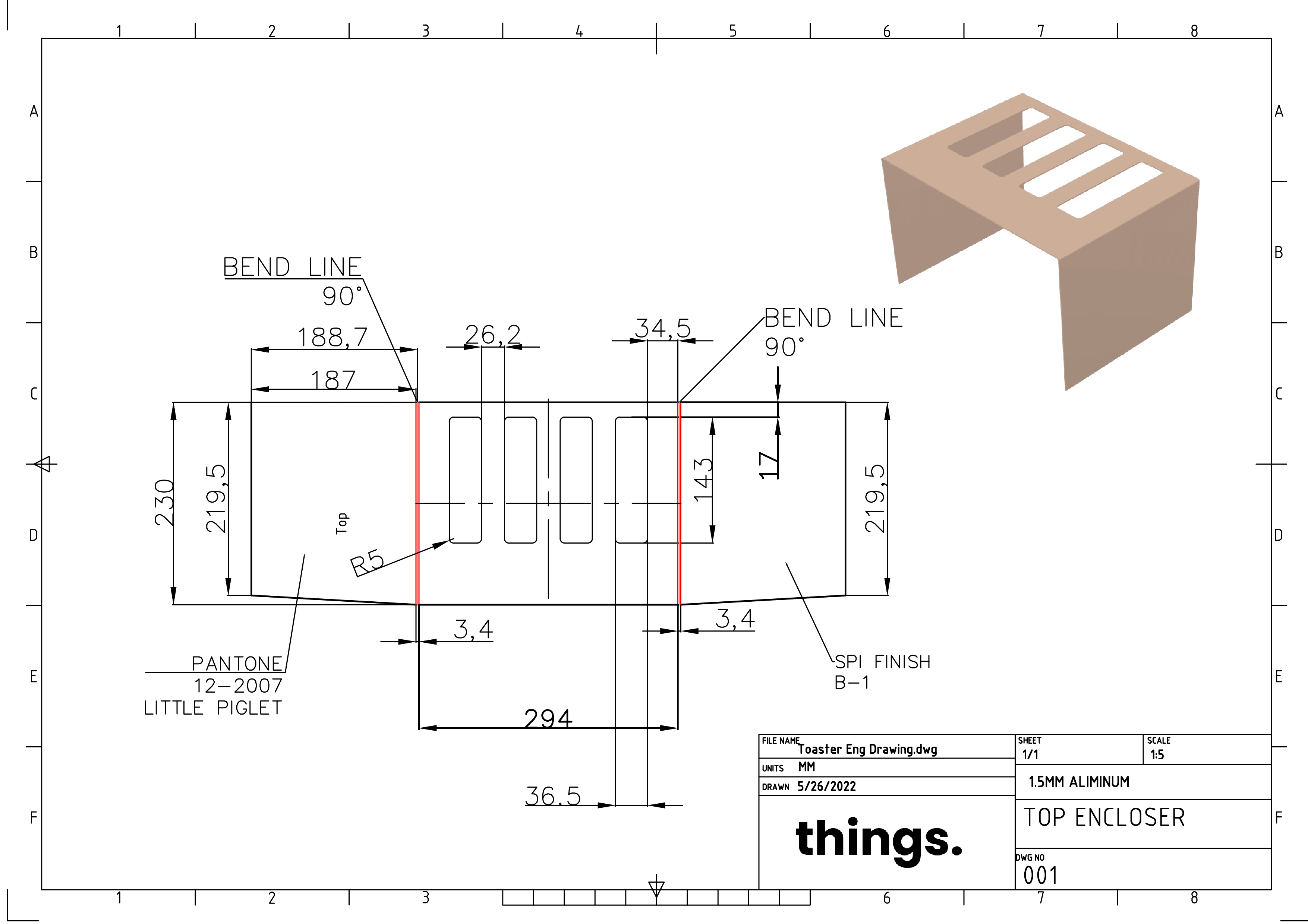
Toaster by Things was my final major project at LSBU, an exploration into what sustainable product design could actually look like when you start from the right question. Instead of asking how to make a toaster more eco-friendly, I asked: what if people could repair, replace, and upgrade individual parts instead of throwing the whole thing away? Inspired by Dieter Rams, I broke the toaster down into modular, plug-and-play components, each replaceable, each honest about how it worked. The outer casing could also be swapped and upgraded, so the product could evolve aesthetically and be loved for longer. The project also proposed a service model to match: return or exchange individual parts, extend the product's life, reduce waste at every stage. The video below is from a pitching competition for £10,000 of further development funding. I won. The project also won the Anglepoise Abandon Darkness Award at New Designers 2022, which recognised it as a design system rather than just a product.

Sustainability as a systemic design shift, not a marketing claim.
Winning the New Designers Award (2022), sponsored by Anglepoise, meant a lot. Especially because the judges recognised it as a design system, not just a product. The thing I keep coming back to is how much the PC building community influenced the thinking. Modularity isn't new. It just hadn't been applied to white goods in a way that felt accessible and desirable. That gap felt worth closing. Toaster by Things is less about toast and more about a question: what if the products we rely on were designed to be kept, not replaced?
Industry
Product Design
Client
London South Bank University (FMP)
A sustainable white good concept for the modern home.
My final year project, rethinking the humble toaster as a modular, repairable system.
Toaster by Things was my final major project at LSBU, an exploration into what sustainable product design could actually look like when you start from the right question. Instead of asking how to make a toaster more eco-friendly, I asked: what if people could repair, replace, and upgrade individual parts instead of throwing the whole thing away? Inspired by Dieter Rams, I broke the toaster down into modular, plug-and-play components, each replaceable, each honest about how it worked. The outer casing could also be swapped and upgraded, so the product could evolve aesthetically and be loved for longer. The project also proposed a service model to match: return or exchange individual parts, extend the product's life, reduce waste at every stage. The video below is from a pitching competition for £10,000 of further development funding. I won. The project also won the Anglepoise Abandon Darkness Award at New Designers 2022, which recognised it as a design system rather than just a product.
Sustainability as a systemic design shift, not a marketing claim.
Winning the New Designers Award (2022), sponsored by Anglepoise, meant a lot. Especially because the judges recognised it as a design system, not just a product. The thing I keep coming back to is how much the PC building community influenced the thinking. Modularity isn't new. It just hadn't been applied to white goods in a way that felt accessible and desirable. That gap felt worth closing. Toaster by Things is less about toast and more about a question: what if the products we rely on were designed to be kept, not replaced?
Industry
Product Design
Client
London South Bank University (FMP)
A sustainable white good concept for the modern home.
My final year project, rethinking the humble toaster as a modular, repairable system.
Toaster by Things was my final major project at LSBU, an exploration into what sustainable product design could actually look like when you start from the right question. Instead of asking how to make a toaster more eco-friendly, I asked: what if people could repair, replace, and upgrade individual parts instead of throwing the whole thing away? Inspired by Dieter Rams, I broke the toaster down into modular, plug-and-play components, each replaceable, each honest about how it worked. The outer casing could also be swapped and upgraded, so the product could evolve aesthetically and be loved for longer. The project also proposed a service model to match: return or exchange individual parts, extend the product's life, reduce waste at every stage. The video below is from a pitching competition for £10,000 of further development funding. I won. The project also won the Anglepoise Abandon Darkness Award at New Designers 2022, which recognised it as a design system rather than just a product.